TL;DR: If you’re figuring out how to reduce no-shows, stack three systems: automatic multi-channel reminders, deposits for risky bookings, and a cancellation policy you actually enforce.
If you run a solo or small-team studio, a no-show isn’t just an empty chair. It’s lost revenue, a wasted product prep, and a slot another client would have happily taken. The good news is that no-shows are mostly a systems problem, not a client-quality problem, and systems are fixable.
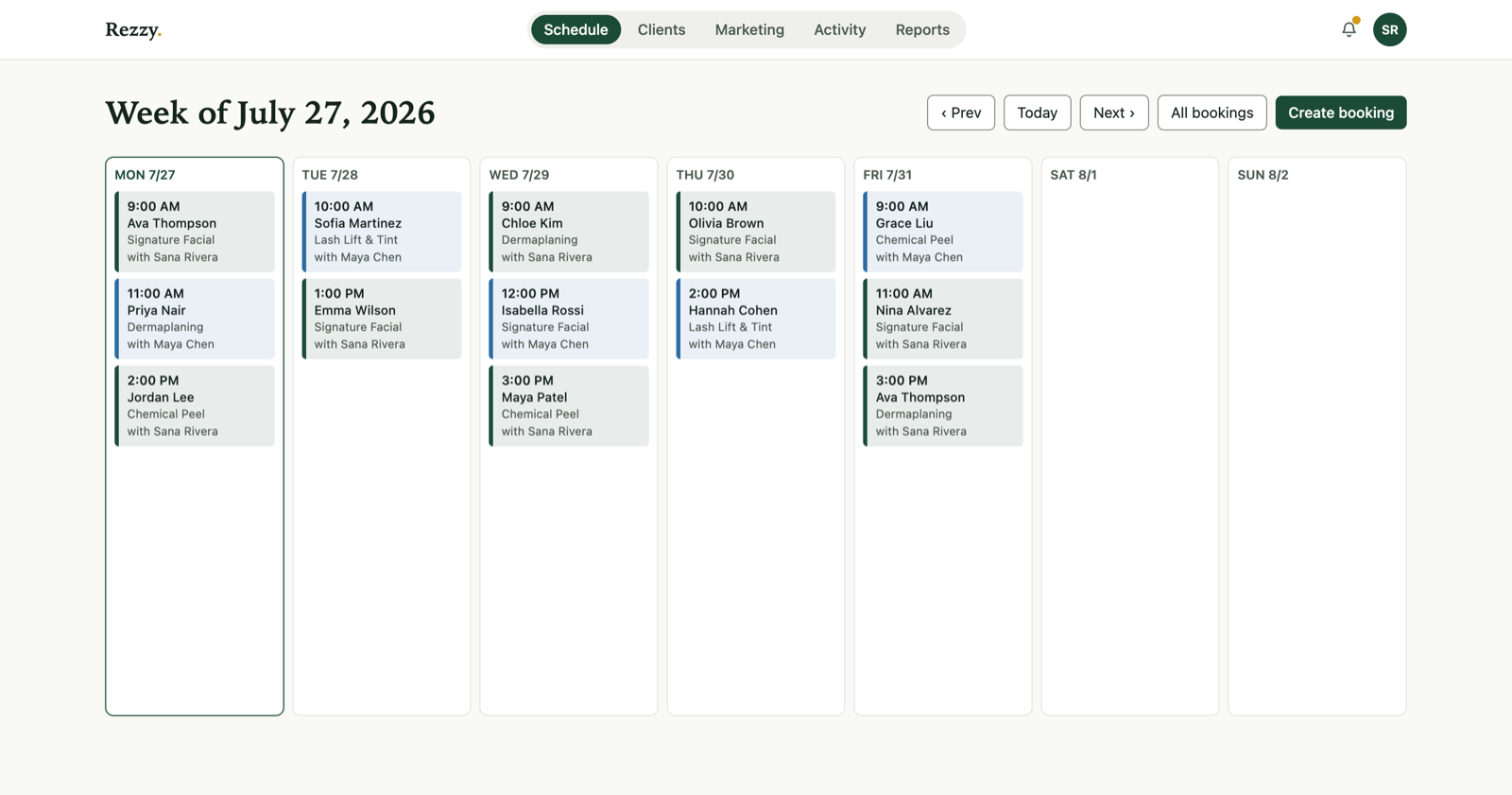
A full week on the Rezzy schedule, the calendar you’re protecting.
Why do clients no-show in the first place?
Clients rarely no-show out of malice. In our experience talking to studio owners, the causes cluster into a few patterns:
- They forgot. No reminder, or a reminder that arrived too early to matter.
- Life got in the way and canceling felt awkward, so they just didn’t show.
- They double-booked themselves and picked the other option.
- The appointment felt low-stakes, because nothing was on the line if they skipped it.
- They couldn’t find your cancellation info and gave up trying to reschedule.
Notice that four of the five are things you can design around. Only “life happened” is truly out of your control, and even that gets softer with a deposit or a good waitlist, because you’re not left fully empty-handed.
How far in advance should you send appointment reminders?
Send at least two reminders on two different channels: one a day or two out to give people time to reschedule, and one a few hours out to catch the same-day forgetters. A single reminder the night before catches some no-shows; a spaced set catches far more.
| Timing | Channel | Purpose |
|---|---|---|
| Immediately at booking | Email or text | Confirms the appointment, sets expectations (policy, address, prep) |
| 48 hours before | Gives enough lead time to reschedule without penalty | |
| 24 hours before | Text | Higher open rate than email, prompts a same-day decision |
| 2-4 hours before | Text | Catches people who forgot despite the earlier reminders |
Text reminders consistently get opened faster than email, most within minutes, which is why the closer-in reminders should be texts. Email still earns its place at booking and the 48-hour mark, when you want the client to actually read policy details rather than glance and swipe away.
The reminder itself should ask for a response, not just inform. If you would rather start from wording that already works, copy one of these appointment reminder templates. “Reply CANCEL if you can’t make it” turns a passive notification into an action, and it’s the single easiest change that moves the needle. Rezzy does this automatically by email for visits booked ahead: a confirm ask a week out, a “Still good for Thursday?” question three days out if the client stays quiet, and the day-before reminder, each carrying a link the client can reschedule or cancel from. A visit still unconfirmed the day before is flagged on your schedule by name, so you’re not chasing anyone between services.
Should you require a deposit to reduce no-shows?
Yes, for the clients most likely to skip: first-time bookings, high-value services, and anyone with a prior no-show on file. A deposit converts an easy “I’ll just not show up” into a real decision, because money is already on the table.
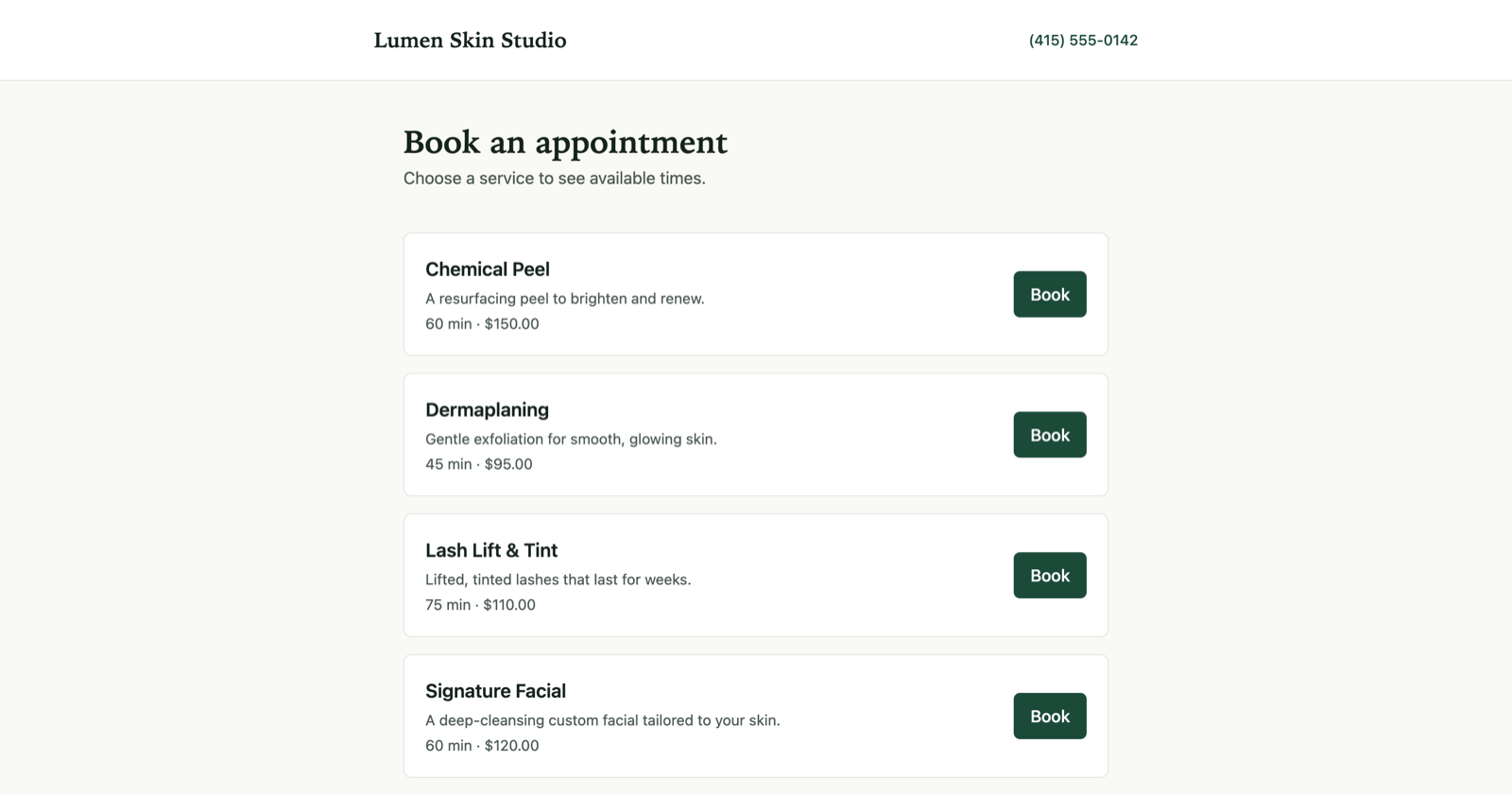
Clients pick a service on your own Rezzy link. If it needs a deposit, they pay it before the booking is made.
A few guardrails that keep deposits from costing you bookings instead of protecting them:
- Keep it proportional. A $20-30 deposit or 20-30% of service price is usually enough friction without scaring off a new client.
- Apply it to the service. Frame it as “goes toward your appointment,” not an extra fee, and say so on the booking page.
- Reserve full prepayment for the riskiest slots. Long or high-cost services (color corrections, multi-hour packages) are worth collecting in full up front.
- Automate the collection. If deposits require a manual invoice or a phone call, most owners quietly stop asking for them. Collecting the card at booking, the way Rezzy’s deposit and no-show protection does, keeps it consistent; setting it up takes about ten minutes.
Existing loyal clients rarely need a deposit; save the friction for the bookings where it actually changes behavior.
How do you write a cancellation policy that clients actually follow?
A policy only works if it’s short, visible before booking, and consistently enforced. A policy buried in an email footer or only mentioned when someone complains isn’t a policy, it’s a suggestion.
Put the policy in three places: on your online booking page itself, in the confirmation message, and in the reminder. Both of those messages should carry the client’s own manage link, so the policy lands right next to the button that lets them reschedule or cancel themselves instead of going quiet. A workable version reads something like:
“Please give us at least 24 hours notice to cancel or reschedule. Cancellations inside 24 hours or no-shows may be charged [amount/percentage].”
Keep the cancellation window to 24-48 hours. Anything shorter doesn’t give you time to fill the slot from a waitlist; anything longer feels punitive for genuine same-day emergencies and clients tune it out. The policy matters less than the enforcement. If you waive the fee every time someone pushes back, clients learn the real policy is “ask nicely and it doesn’t apply,” and the deposit or fee stops doing any work.
Tired of chasing reminders and deposits by hand? Rezzy sends the reminder emails and collects deposits automatically. Take a booking today.
What should you text a client who no-shows?
Text within an hour, be direct but warm, and make rebooking the easy next step rather than a lecture. Something like:
“Hi [name], looks like we missed you for your [time] appointment today. No worries, life happens! Here’s a link to grab a new time: [booking link].”
Skip the guilt-trip framing. A client who feels scolded is less likely to rebook at all, and you’d rather have a slightly inconsistent regular than lose them entirely. If it’s a repeat pattern (their second or third no-show), that’s the moment to mention the deposit policy directly, not the first time. For more wording you can copy straight into your phone, see our rebooking text message templates.
How do waitlists help reduce no-shows and fill gaps?
A waitlist turns a cancellation or no-show from a total loss into a filled slot. When a client cancels inside your policy window (or just doesn’t show), an automatic text to the next person on the waitlist can fill that hour before you’ve even noticed it opened up.
The mechanics that make a waitlist actually work:
- Notify instantly, not at day’s end. A gap that opens at 9am and gets offered at 5pm is already gone.
- First response wins, not first added. Whoever replies fastest gets the slot; this rewards responsiveness instead of making people wait in a queue.
- Keep the ask short. “A 2pm opened up today, want it? Reply YES” converts better than a full booking-page link.
Waitlists don’t prevent the original no-show, but they cap the damage, and over a few months they recover a meaningful chunk of the revenue no-shows would otherwise take off the books.
How does rebooking at checkout prevent no-shows down the line?
Clients who book their next appointment on their way out the door are far less likely to no-show than clients who book cold weeks later, because the appointment is already anchored to a real routine (color touch-up in six weeks, facial every month) rather than a vague future intention.
Make rebooking a habit, not an afterthought:
- Ask “let’s get you on the books for next time” before the client leaves the chair, not in a follow-up email days later.
- Suggest a specific date based on the service’s typical interval (e.g., “most clients come back around 5-6 weeks for this”).
- Confirm it the same way you confirm any booking, with reminders attached automatically.
This is also where a client CRM earns its keep: once you can see who’s overdue for a rebook, you can nudge them before they drift off the calendar entirely, rather than hoping they remember on their own. Rezzy tracks this automatically from booking history (the Needs rebooking list is the whole workflow), which is one reason studios move their whole front desk over from a paper book or spreadsheet, start today and see it against your own calendar.
Putting it together
No single tactic eliminates no-shows. The studios with the lowest no-show rates run all of it at once: reminders on a fixed schedule, a deposit for the riskiest bookings, a policy that’s visible and enforced, a few clients ready to take a slot that opens, and a rebooking habit that keeps clients anchored to a routine. Handled manually, that’s a lot of daily busywork. Once it’s set up, Rezzy handles the routine parts on its own: it emails the confirm asks and the day-before reminder, takes the deposit, full payment or card on file when the client books, with your cancellation cutoff on the same screen, and keeps the Needs rebooking list of who’s overdue. On the Unlimited plan, an autopilot email can also go out the day after you mark a no-show, with a link to book again. Offering a slot that opens up is still yours to do, so keep those few names close.